
How to fix insomnia:I Tested Bryan Johnson’s “Perfect Sleep” for 14 Days
I used to be a severe chronic insomniac—watching the sunrise before I could finally fall into a shallow, restless sleep. Every morning felt like a disaster.
I spent years searching for ways to fix my insomnia without pills, trying countless supplements and “health products.” Nothing worked.
Then one day, YouTube recommended a video by Bryan Johnson. I wasn’t a fan or a critic—but I was desperate. At that point, I made a commitment: if there was even a small chance to improve my sleep naturally, I would try it.
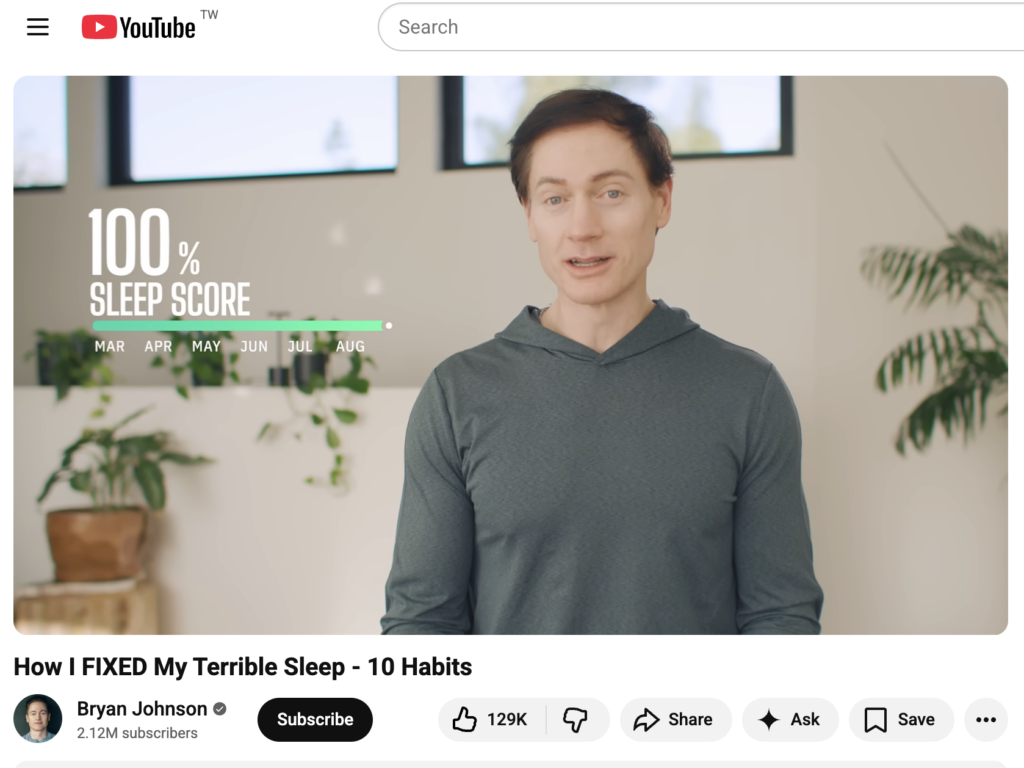
Now, I consistently fall asleep between 11:00 and 11:30 PM and wake up naturally at 9:00 AM. That feeling of being “refreshed” was something I couldn’t even imagine before. This is my 14-day experiment on how to fix insomnia by forcing the body to “shut down” properly.
“The day begins in the morning”, that is fundamentally wrong.
The quality of your energy, mood, and productivity for the entire day is actually decided by your sleep ritual the night before.
1. The Lesson of a Failed Shutdown: No Screens After 10 PM
I used to think I could sleep as long as I was tired. But one night, I worked until midnight and tried to go straight to bed. I found I couldn’t sleep at all. That night taught me a brutal lesson about insomnia treatment: Even if your computer is off, your brain is still wired from blue light stimulation. It simply isn’t ready. Now, No Screen After 10 PM is my non-negotiable rule. I switch to reading physical books to allow my brain to transition from high-frequency work mode to a calm state.
2. A Working Stomach Equals a Wired Body: Dinner Before 7 PM
The timing of your last meal is a critical factor in sleep optimization. I remember eating a very late dinner once; lying in bed, I could literally feel “my stomach was still working.” When your body is busy digesting, it cannot fully relax. If your body is active, your insomnia will only get worse. I now strictly adhere to finishing dinner before 7 PM. Let your digestive system clock out so your body can finally shut down.
3. My Sensory “Surrender” Ritual: Why Stretching is the Secret Weapon
To cure my insomnia, I didn’t care which sensory hack worked best—I did them all:
- Audio and Scent: I play meditation music while applying scented body lotion. I surround my brain with “relaxation signals.”
- Bedtime Stretching: This was the biggest revelation of my 14-day trial. I found stretching to be even more effective than meditation. It forces the muscles you’ve tensed all day to settle down. Multiple times, I felt a massive wave of sleepiness hit me while stretching; I was almost asleep before I even hit the pillow.
4. The Science of 25°C: Low Temperature for Deep Sleep
Science suggests that humans fall asleep easier in cooler environments because the body needs to shed heat. I keep my AC at 25°C (77°F).
If the room is cool enough, you won’t toss and turn as much to regulate your body temperature, making your sleep quality incredibly stable. Every morning since I started this, I wake up with a genuine sense of physical repair.
5. The Sanctity of the Bed and Sunlight Anchoring
- The Bed is for Sleep Only: I stopped scrolling through my phone in bed. This creates a powerful psychological trigger—the moment I hit the bed, my brain knows it’s time to sleep.
- Sunlight After Wake Up: I make sure to get direct sunlight for 2-3 minutes right after waking up at 9:00 AM. It clears the brain fog instantly. If you stay groggy until noon, your sleepiness for the coming night will be delayed. Sunlight is the anchor for my circadian rhythm.
14-Day Sleep Experiment Checklist
| Habit | Core Benefit | Practical Execution |
| No Screen After 10 PM | Eliminates light pollution | Phone off at 10; switch to physical books. |
| Dinner Before 7 PM | Stops digestive interference | No late-night snacks; let the stomach rest. |
| Stretching | The ultimate sleep trigger | Combine with meditation music and scents. |
| 25°C Room Temp | Reduces tossing and turning | Keeps body cool for stable deep sleep. |
| Bed for Sleep Only | Strengthens brain-bed connection | No working or scrolling in bed. |
| Sunlight After Wake Up | Resets circadian rhythm | 2-3 mins of sun to anchor the night. |
| Consistent Schedule | Automates body’s internal clock | Sleep 11:30 PM; Wake 9:00 AM. |
Are You “Trying,” or are You “Committed”?
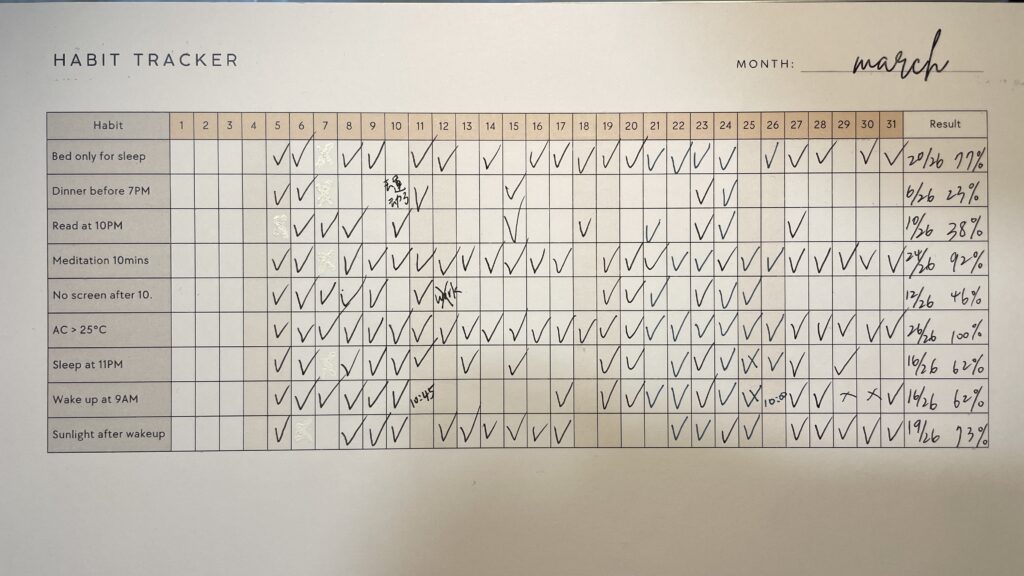
Looking at my habit tracker, you might notice many unchecked boxes. That’s because I’m strict with myself—if I’m even 10 minutes late, I won’t check it off. For example, even if I struggle with the “no screen” rule, I still ensure I don’t touch my phone for at least 30 minutes before bed.
But here is what I want to tell you: You doesn’t have to be perfect. Even if you don’t hit every goal, just taking action can lead to a massive transformation in your sleep optimization. You don’t need a perfect score to see a perfect sleep result; you just need to start.All the habits mentioned in this article are simple. You’ve probably heard them before. But here is the real question: They are simple, but did you actually DO them?
I’m sharing this today because I want anyone suffering from insomnia to know: Do not give up. As long as you have the will to change, nothing is impossible.
I’ve been where you are—at a dead end, feeling like a single night of deep sleep was a distant, unreachable dream. But today, I am sleeping perfectly without relying on any medication. This journey has taught me that no matter how dark it gets, there is always hope for a better life.
The cure for insomnia isn’t found in reading more “authoritative” medical papers; it’s found in your commitment to yourself. I stopped “trying” to sleep better and started sticking to the rules. When you stop negotiating with your body, you will finally see the change.
This isn’t just a habit. It’s a commitment to your life.